
 Shqip
Shqip Srpski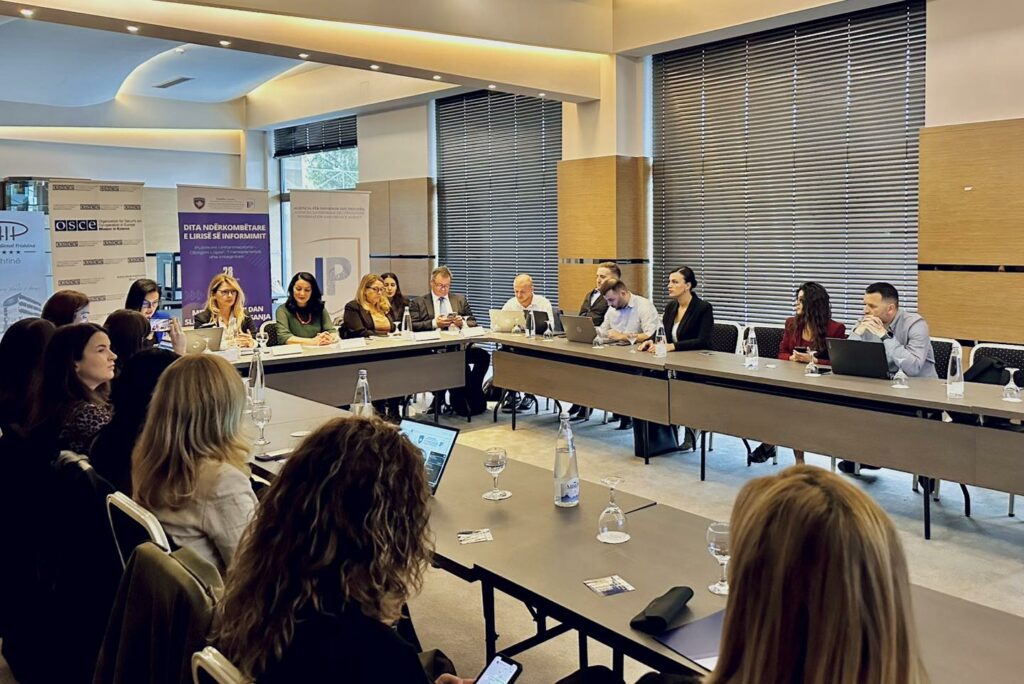
On the occasion of the International Day for Universal Access to Information, the Information and Privacy Agency, with the support of the OSCE Mission in Kosovo, today organized a discussion roundtable under the motto “Disclosure of Information – legal obligation, transparency and integrity”, with the participation of representatives of civil society and donor organizations, with the aim of promoting the right of access to public documents and strengthening institutional transparency.
The Commissioner for Information and Privacy, Krenare Sogojeva Dermaku, emphasized that the right of access to public documents is not only a legal obligation, but also an essential element for building a democratic, open, and inclusive society. In particular, she underlined that transparency is the most direct proof of institutional integrity and the best way to strengthen citizens’ trust in public institutions.
In her speech, Mary Ann Hennessey, Head of the Council of Europe Office in Pristina, highlighted the importance of inter-institutional cooperation to advance the culture of transparency and the right to information, describing it as a fundamental human right and a prerequisite for democratic development.
Meanwhile, Jarmo Helppikangas, Head of the Rule of Law and Legal Section at the European Union Office in Kosovo, congratulated the Agency for its role and reaffirmed the EU’s support for strengthening transparency and the protection of personal data, as fundamental principles of the rule of law and good governance.
During the discussion, Nensi Jasharaj from the Democratization Department of the OSCE Mission in Kosovo reaffirmed the close cooperation and continuous support of the OSCE in promoting two fundamental rights, namely access to public documents and the protection of personal data.
As part of the activity, the Head of the Division for Review of Access Complaints, Arbëri Hiseni, presented the Comparative Report on Access to Public Documents for the period January–August 2025, outlining the Agency’s achievements, challenges, and key comparative findings with previous years.
The roundtable concluded with an open discussion with representatives of civil society, where ways to advance this right were addressed, including the exchange of best practices, identification of institutional challenges, and concrete recommendations for:
strengthening cooperation with civil society and the media in implementing joint projects to enhance transparency and accountability;
overcoming the challenge of limited staff capacities in the face of the growing number of complaints;
intensifying the information and awareness of public institutions regarding the proactive publication of documents.
